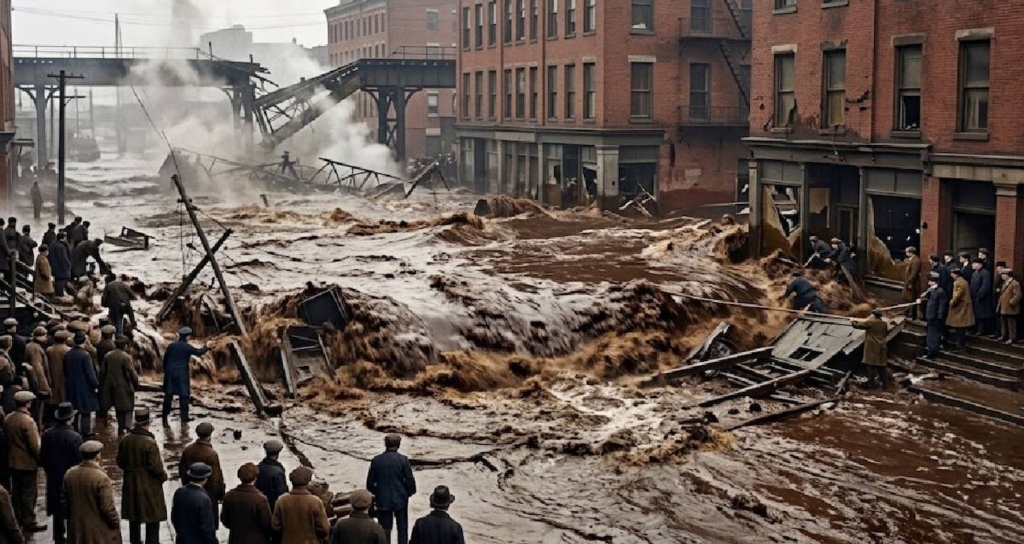
In 1919, a catastrophic failure at an alcohol production facility in Boston unleashed an 8-meter wave of 8.7 million liters of molasses, which surged through city streets at 56 kilometers per hour, killing 21 people, injuring hundreds, and prompting lasting reforms in industrial safety standards.
Industrial Pressure and Structural Failure
The industrial facility utilized the massive steel reservoir to store 8.7 million liters of molasses intended for alcohol distillation. Unseasonably warm atmospheric temperatures accelerated fermentation, a biochemical process in which organic compounds break down and produce gas, generating severe internal pressure. Unable to withstand the intense expansion against its steel walls, the containment vessel fractured with tremendous force and exploded.
The blast released immense kinetic energy, hurling fragmented steel plates into nearby structures and sending the heated, viscous mass into public avenues. Traveling at 56 kilometers per hour, the 8-meter torrent demolished residential houses, elevated railway bridges, and tunnel systems along its path. Victims who were trapped beneath the dense fluid suffered fatal blunt trauma from structural wreckage or died of suffocation, while hundreds more sustained severe injuries.
Environmental Aftermath and Regulatory Overhaul
Recovery and environmental mitigation efforts continued for months as municipal crews worked to extract the thick sludge from city streets, municipal drainage lines, and harbor waters. Molasses residue seeped directly into road subsurfaces and the stone foundations of local buildings, inflicting sustained structural damage. Official documentation and eyewitness accounts recorded that during elevated summer temperatures, a strong odor of molasses remained noticeable throughout Boston for years following the incident.
The catastrophe exposed critical deficiencies in the management of high-capacity storage infrastructure and commercial chemical production. In direct response to the widespread destruction, regulatory authorities systematically overhauled industrial safety statutes, instituting mandatory structural inspections and rigorous technical standards for commercial containment facilities.