In the town of Yelets, the “special military operation” has transitioned from a predicted short-term mission to a protracted struggle that is reshaping the Russian social and economic landscape.
In the Lipetsk region, some 350 kilometers south of Moscow, the outward appearance of a traditional Russian winter belies a deepening domestic crisis. Army recruitment billboards now dominate the skyline, offering signing bonuses of approximately £15,000 to those willing to serve in the ongoing campaign in Ukraine. The conflict, which began in February 2022, has now surpassed the duration of the Soviet Union’s involvement in World War II.
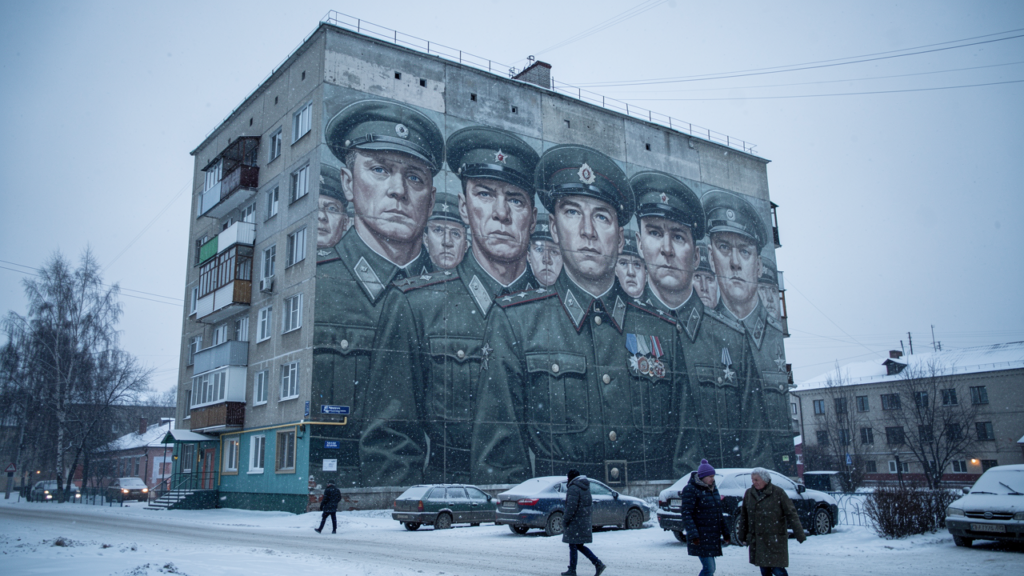
The human cost is becoming impossible to ignore in regional centers. While Moscow maintains a strict policy of withholding casualty statistics, local tributes tell a different story. In Yelets, a nine-story apartment building now features a massive mural honoring five local residents killed in action. Similar memorials and expanded military sections in local cemeteries have become common fixtures across the Russian provinces.
“Lots of people have been killed. I feel sorry for these lads. In the Great Patriotic war, we knew what we were fighting for. I’m not sure what we’re fighting for now.”
Beyond the loss of life, the civilian population is grappling with severe financial pressure. The Russian government recently increased VAT from 20% to 22% to fund its “defense and security” budget. This move, combined with rising utility costs and inflation, has left many citizens, including those who support the military’s objectives, struggling to maintain their standard of living.
SOURCES: Russian Ministry of Finance, Kremlin press releases, Russian State Television, local residents of Yelets and Lipetsk.
This report has been significantly transformed from original source material for journalistic purposes, falling under ‘Fair Use’ doctrine for news reporting. The content is reconstructed to provide original analysis and reporting while preserving the factual essence of the source.