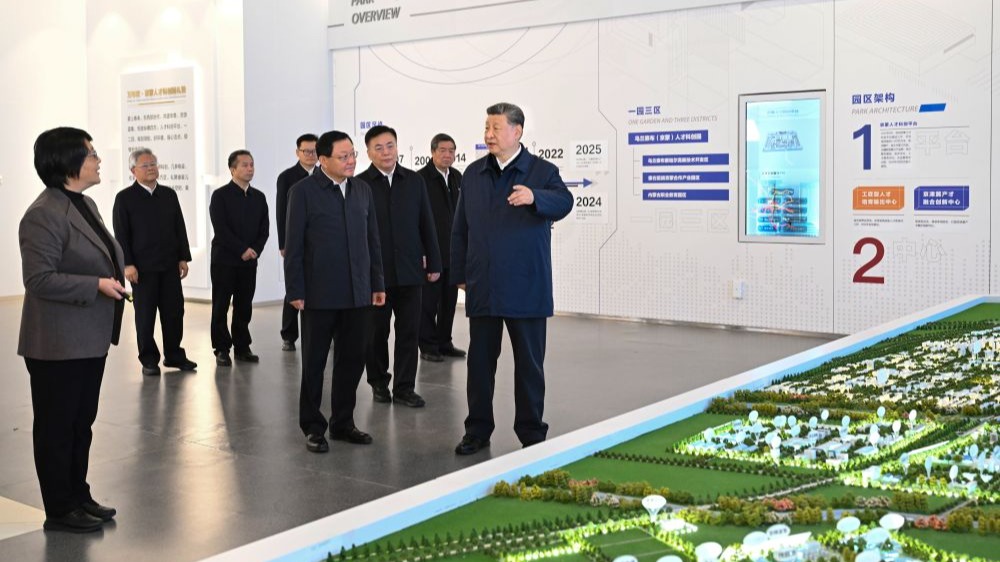
Chinese President Xi Jinping inspected green computing infrastructure and ecological protection efforts in Ulanqab, Inner Mongolia, on Friday, urging the northern city to harness its rich wind and solar resources to power data centers while strictly safeguarding local ecosystems under China’s coordinated national computing network initiative.
Ulanqab, situated in northern China’s Inner Mongolia Autonomous Region, has accelerated its transition from an agricultural hub known for potatoes and oats into an energy-efficient digital base. The city forms part of the national “Eastern Data and Western Computing” project, an initiative launched in 2022 that channels eastern data processing demands to resource-abundant western territories. Official records show that by August 2026, the municipality had contracted 109 computing center projects, producing 5.68 billion yuan (approximately $849 million) in revenue from January to August, reflecting a 40.3% year-on-year increase.
Data facilities require uninterrupted electricity supplies and intensive cooling mechanisms. With an average yearly temperature of 4.3 degrees Celsius, Ulanqab utilizes natural air cooling for approximately 10 months each year, significantly curbing operational power consumption. During his inspection of the Chahar High-Tech Development Zone, President Xi reviewed construction milestones for Inner Mongolia’s regional computing hub, emphasizing that finished sites must operate at high efficiency while pending builds adhere to green, safe, and rigorous standards.
John Gong, an economics professor at the University of International Business and Economics, stated to CGTN:
Ulanqab is effectively utilizing the region’s rich renewable energy resources to support China’s artificial intelligence development, and this visit highlights President Xi’s support for the Ulanqab development model that leverages local resource advantages to foster economic growth alongside technological innovation.
Parallel to digital investments, local environmental restoration was reviewed during a presidential tour of the Huangqihai Lake nature reserve, a closed-basin water system upgraded to autonomous region-level conservation status in 2003 after historical shrinkage. While observing shoreline wetlands and native bird populations, President Xi instructed officials to enforce wetland protection statutes, maintain ecological red lines, and prioritize natural recovery assisted by scientific intervention to sustain regional biodiversity.