The Food Safety Association, organized in collaboration with the International Association for Food Protection, will convene the 9th International Food Safety Congress in Istanbul on November 5–6, 2026, examining how artificial intelligence and emerging digital tools shape risk detection, production monitoring, and traceability throughout global food supply networks.
Held under the theme “Access to Safe Food: Everyone’s Right, Everyone’s Responsibility,” the gathering at the Grand Cevahir Hotel will bring together researchers, public sector officials, and industry representatives. Deliberations will focus on managing large volumes of agricultural and processing data, identifying potential contamination hazards at earlier stages, and supporting data-driven preventive interventions across storage and distribution lines.
Technological Traceability and Supply Chain Integrity
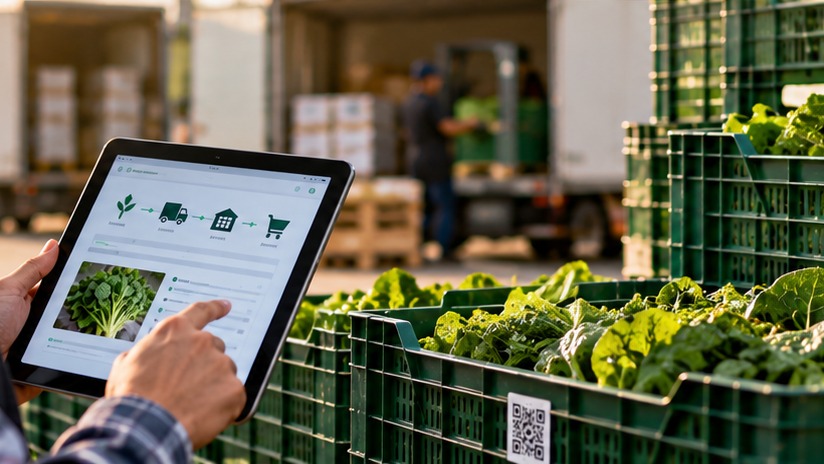
Digital transformation priorities will center on farm-to-table visibility and product authenticity verification to counter fraudulent adulteration. The program will showcase innovations such as digital food fingerprinting and lab-on-a-chip testing—miniaturized analytical devices that integrate laboratory functions onto a single circuit—to complement traditional inspection methodologies.
Participants will also review advances in agentic artificial intelligence, referring to automated systems capable of independently scheduling tasks and interfacing with distinct management platforms. Discussions will address the capacity of these autonomous models to provide uninterrupted compliance monitoring throughout cold-chain storage and transit stages.
Algorithmic Risks and Sector Governance
The integration of algorithmic controls into food operations also introduces technical liabilities, including the integrity of baseline data, scientific validity of automated outputs, and systemic overreliance on automated software. Sector experts emphasize that automated findings must remain anchored by professional human validation to prevent hazards affecting public health.
Established in 2004 as Turkey’s first non-governmental organization in the sector, the Food Safety Association advances dialogue among primary producers, consumers, government bodies, and academic institutions to standardize oversight and consumer safety from agricultural origin to consumption.