Huawei unveiled its upgraded Stellar Intelligent Fabric for the European market during the Huawei Network Summit 2026 Europe roundtable. Engineered to boost operational efficiency and cut power consumption, the open data center networking architecture provides enterprise facilities with enhanced structural resilience, automated maintenance, and uninterrupted workload management across digital infrastructures.
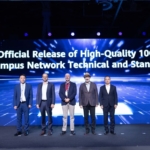
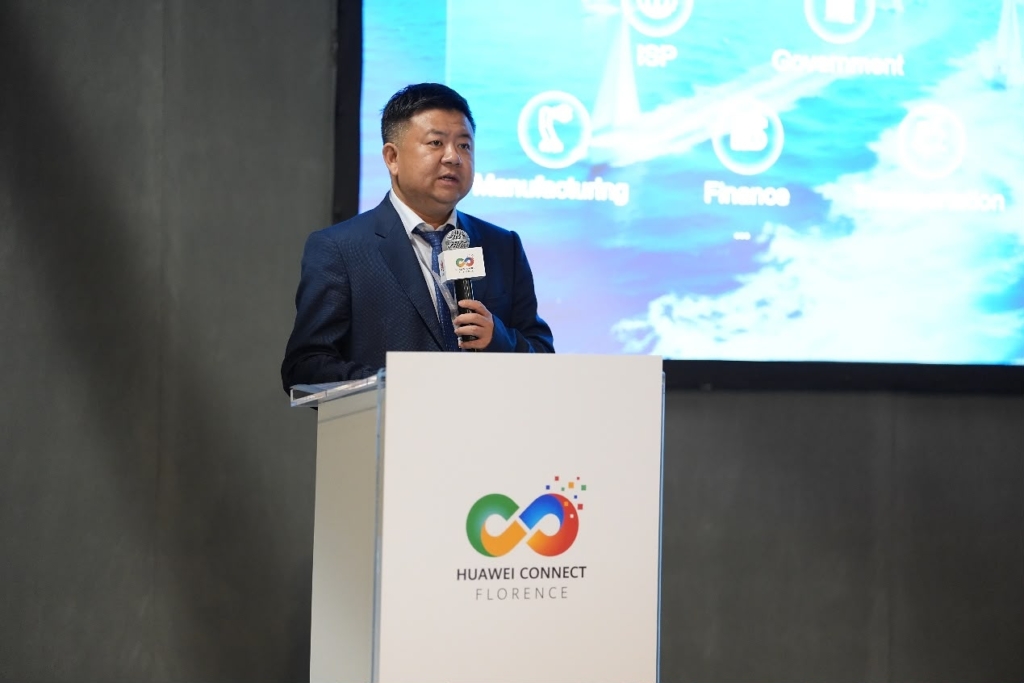
Bingyu Zhou, Deputy Director of Huawei European ICT Marketing and Solution Sales Department, opened the executive session titled “Built on Resilience, Shaped by Intelligence: Building Europe’s Next-Generation Open Data Center Networks.” Zhou stated that artificial intelligence adoption over the next decade will reshape global industries while generating strategic commercial opportunities across Europe, adding that Huawei continues regional partner collaborations under its “In Europe, For Europe” framework to build open network infrastructure.
Artificial intelligence adoption will reshape global industries over the next decade and create a strategic opportunity window for Europe. Hyper-scale capacity, high data processing throughput, automated operation and maintenance, modular architecture, and low power consumption allow Huawei data center networks to contribute directly to Europe’s green strategy and industrial digitization.
Addressing infrastructure reliability, Johnny Cheng, Vice President of the Data Center Network Domain at Huawei’s Data Communication Product Line, stressed that exponential growth in data center scale and operational complexity increasingly strains uptime and system efficiency. To resolve these operational hurdles, Huawei deployed the Stellar Intelligent Ultra-Resilient Fabric, integrating StarryWing Digital Map 2.0 and Rock-Solid Architecture 2.0 systems to remove single points of failure across critical compute workloads.
Outlining the enterprise deployment results of the architecture, KoçSistem Solution Manager Mesut Özca stated:
“We collaborated with Huawei to modernize our data center resilience and established a multi-data center topology using the StarryWing Digital Map. Multi-layer networking delivers cross-center self-healing capabilities, ensuring our computing services stay seamlessly online even during local hardware failures.”
Focusing on global interconnectivity benchmarks, Aldo Artigiani, Technical Lead of the Connectivity Working Group at OEHI, emphasized that artificial intelligence is driving an intelligent era that requires dependable digital backbones. Artigiani highlighted that international standardization bodies, including the ITU-T and OEHI, have established Ethernet specifications for artificial intelligence and high-performance computing (HPC) to secure higher output and an optimized total cost of ownership, calling on industry stakeholders to adopt open Ethernet protocols to sustain shared technological development.