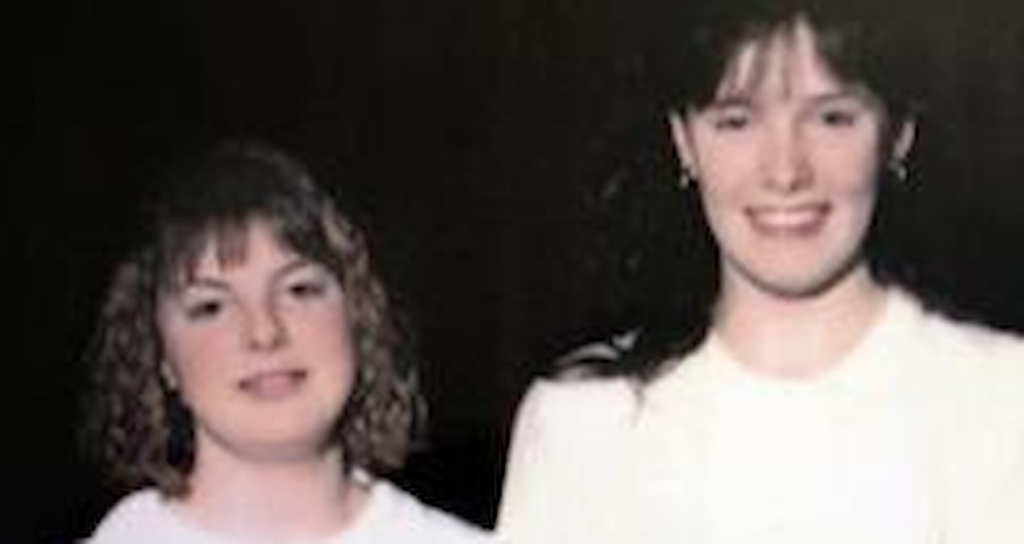
Thirty-five years after 16-year-old Diane Watson was fatally stabbed in a Glasgow school playground, her closest friend Pauline Love Thomson has spoken publicly for the first time about the 1991 tragedy, the devastating toll on the victim’s family, and the enduring bond formed in the aftermath.
Pauline shared her memories on the BBC Scotland podcast “Crime Next Door: The Playground Murder,” reflecting on the murder and its lifelong consequences. She was also 16 on the day of the incident and was among those who tried to carry her wounded friend to safety across from Whitehill Secondary School in eastern Glasgow.
The Fatal Attack and Murder Trial
On an April morning in 1991, 15-year-old Barbara Glover arrived at the school carrying a kitchen knife following an altercation outside a shop the previous day. According to Pauline, Glover shouted at Watson as other students gathered around and then stabbed her.
Pauline recounted the immediate moments after the assault:
“I went over to her, wrapped my arm around her shoulder. Because at that moment, I hadn’t realized how much damage the knife could have done. It was a big knife.”
Assisted by two other students, Pauline helped move Watson across the street, but the injured teenager collapsed at the entrance of her family’s apartment block. Her father, Jim, ran down to carry his daughter inside, attempting to keep her alive alongside her mother, Margaret, and her 15-year-old brother, Alan. Watson was later pronounced dead at Glasgow Royal Infirmary, while Glover turned herself in to the police.
During the trial three months later, Pauline served as the first witness. She testified that Glover had been harassing Watson because Glover mistakenly believed Watson was dating her ex-boyfriend, though Pauline stated Watson had no romantic interest in him. Glover claimed in court that Watson had bullied her for over a year, an allegation rejected by Pauline and fellow witnesses.
The jury delivered a unanimous guilty verdict against Glover. Because she was under the age of 16, the court ordered her detained without a set release date. Glover served eight and a half years before being released from custody in 2000.
Media Fallout and Family Loss
Following the trial, columnists Jack McLean of The Herald and Meg Henderson of Marie Claire wrote pieces criticizing indefinite detention for minors without having attended the court proceedings. Both commentators relied on Glover’s claims of bullying, with McLean making dismissive remarks about the Watson family’s social background. Watson’s mother worked in a school canteen, and her father worked as a temporary postal employee.
The Watson family believed the columns smeared their daughter’s reputation and blamed the victim. When Margaret sought to pursue legal action, she was advised that Scots law provided no legal recourse for the defamation of a deceased person. Watson’s younger brother, Alan, struggled severely with both the loss of his sister and her portrayal in the press, taking his own life less than two years after the murder.
Margaret Watson spent years campaigning to hold media outlets accountable, bringing her efforts to prime ministers, members of the House of Lords, and the press reform group Hacked Off. In November 2011, she testified before the Leveson Inquiry examining British press ethics:
“Just because a person has died, their reputation should not die with them. It should not be tarnished at the whim of an ill-tempered journalist,” said Margaret.
Jim Watson died in 2020 at the age of 69, and Margaret died the following year at 71. Both The Herald and Marie Claire issued apologies to the family during their lifetimes.
Support Amid Ongoing Grief
Pauline explained that she agreed to tell the story not only for Diane, but also to honor Alan and their parents. She was joined during the interview by her husband of 34 years, Andy Thomson, who was Alan’s closest friend at the time of the killing.
The couple supported each other through their shared bereavement, with Andy noting that his closeness to Alan helped him understand Pauline’s trauma:
“It was left to us to cope with this, and we helped each other. Our whole life was not just trauma; it definitely was not. But trauma also became a part of our life,” said Andy.
Andy emphasized that the family wanted the siblings remembered beyond the headlines that followed their deaths:
“We wanted people to know them better as children. Because that’s what they were: they were children. Two ordinary young people who should still be alive today,” Andy continued.