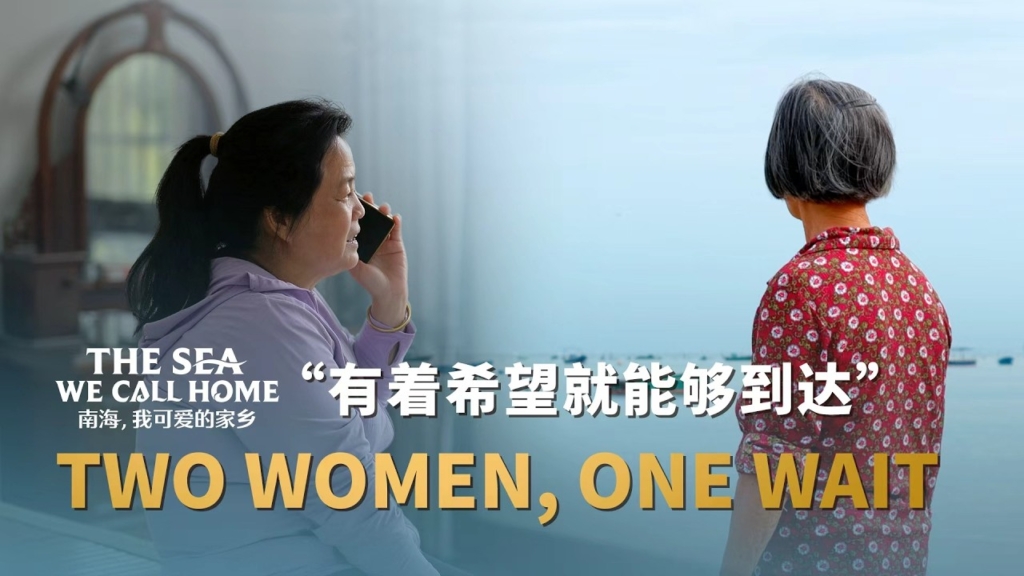
A CGTN documentary chronicles the generational lives, perils, and evolving practices of fishing families in Tanmen, southern China’s Hainan Province, who have navigated the South China Sea for decades amid declining catches, modernizing vessels, and enduring coastal vigils for lost loved ones.
The human cost of offshore livelihoods surfaced in 1975 when a vessel carrying 30 individuals vanished without returning. Su Xianli was among those lost at sea, leaving behind his wife Fu Yuhua, who still preserves his sole surviving photograph more than half a century later.
“My three children were still very young back then. They had already lost their father. What would happen to them if they also lost their mother?”
Fu’s son, Su Biaowei, eventually took up his father’s maritime trade despite the family trauma. When he ventured into offshore waters, his mother and his wife, Lu Chunxiang, routinely monitored the coastline. Lu’s own father had perished in the identical 1975 maritime disaster, leaving both spouses fatherless at five years of age.
“Of course I worry about him, especially when the weather turns bad or the sea becomes rough.”
Centuries of Maritime Heritage Face Environmental and Technical Shifts
Along the coast of Tanmen, coastal families have developed navigation methods passed down through generations. The late Su Chengfen, who started seafaring alongside his grandfather at age 13 before passing away in 2021, preserved ancient route handbooks known as Genglubu, traditional navigational manuscripts that documented maritime pathways long prior to satellite positioning networks.
“Whenever we wanted to know which course to take toward a specific reef, all we had to do was consult the Genglubu.”
While some divers still scour reef ecosystems relying on accumulated manual practices, marine yields have diminished and fewer younger workers choose manual techniques. Around Jinqing Island, operations have adapted through larger transport ships ferrying smaller vessels farther offshore, alongside cargo transport by mariners like Feng Ping, whom documentary crews first met 12 years ago.
“The sea we sail upon has not changed much. But the people have changed.”
The broader social dynamics of coastal communities form the basis of CGTN’s five-part documentary, The Sea We Call Home. Reflecting on his childhood waits along the shore, local resident Wang Zhenzhong recalled mistaking arriving vessels for his father’s boat during an era lacking modern ship-to-shore communications.
“We saw a tiny dot on the horizon that slowly grew larger. A boat was returning. But once it reached the fishing harbor, it turned out not to be ours. So we just had to keep waiting.”
“Men sail into the open sea. They do this for their homes. Women wait for them and raise the children. That is what home means. When they grow up, the children follow in their fathers’ footsteps. That, too, is what home is.”